Schematics
LELO_GR02_SKY130A
LELO_GR02
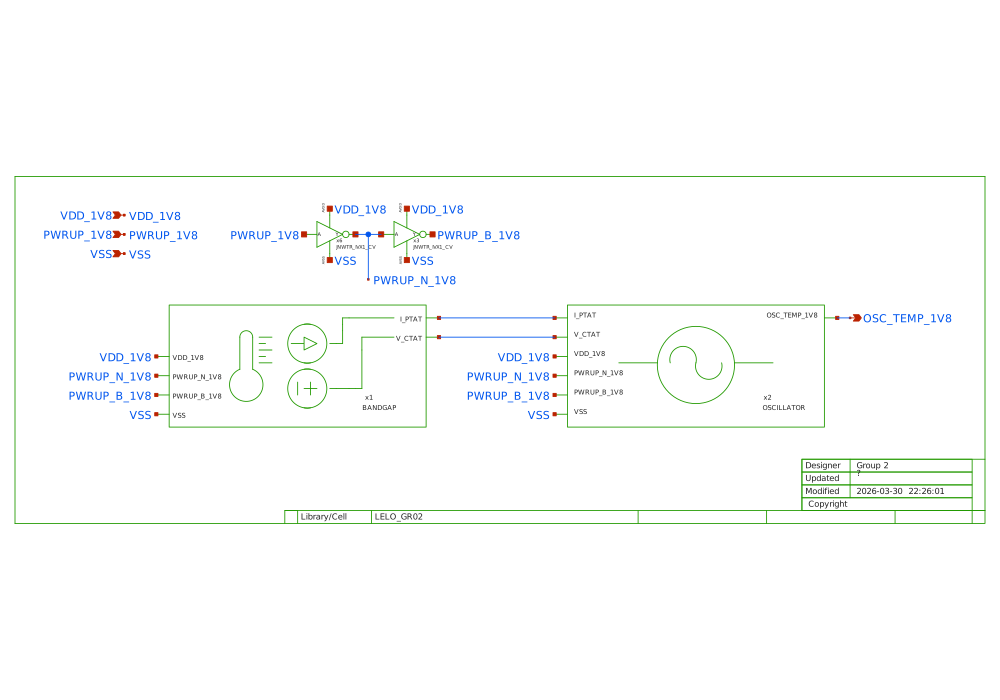
This schematic shows the complete system, which consists of a bandgap reference and an oscillator. The bandgap produces a reference voltage and a bias current, which are fed into the oscillator. The oscillator generates a clock signal that is used to drive a counter.
BANDGAP
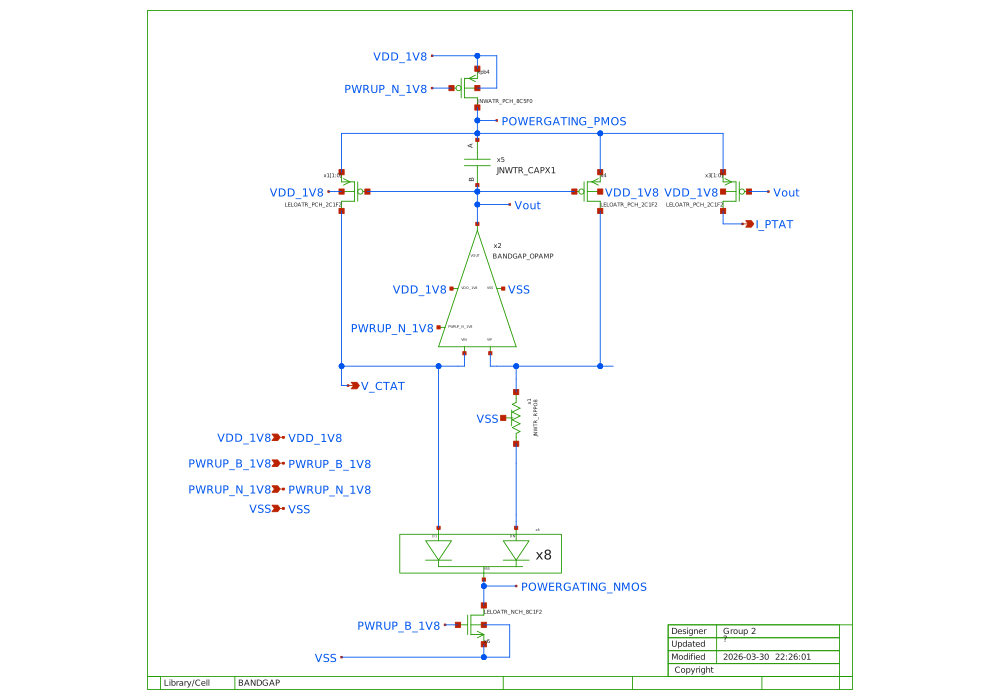
The schematic depicts a bandgap reference circuit, which provides a temperature-independent voltage reference by combining PTAT and CTAT signals.
The bandgap reference has four inputs and two outputs. The supply voltage VDD_1V8 provides a 1.8 V DC supply to the circuit, while VSS serves as the ground reference.
There are two power-up signals; PWRUP_B_1V8, a buffered non-inverted signal used to enable the NMOS transistor for power gating, and PWRUP_N_1V8, an inverted signal used to control the PMOS transistor for power gating. Power gating is implemented to reduce leakage current and overall power consumption when the circuit is not active.
The bandgap circuit generates two outputs: I_PTAT and V_CTAT. The I_PTAT output is a current that is proportional to absolute temperature (PTAT), while V_CTAT is a voltage complementary to absolute temperature (CTAT).
In this system, V_CTAT serves as a voltage reference for the oscillator, while I_PTAT is used to charge the oscillator’s capacitor. The capacitor’s charging and discharging cycles control the oscillator’s frequency, which varies linearly with temperature
BANDGAP_OPAMP
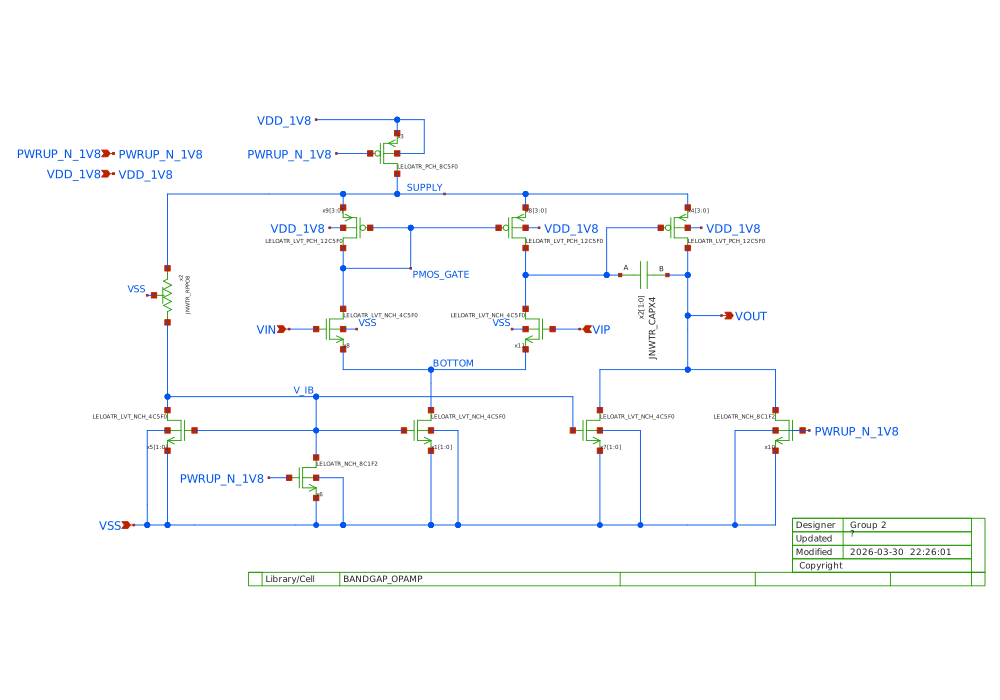
The operational amplifier used within the bandgap circuit is shown in the figure above. It consists of an NMOS differential input pair combined with a PMOS current mirror load to provide amplification. Below the differential stage, a simple NMOS current mirror is used as a current source. A 8 kOhm resistor generates the bias current required to properly drive the op-amp. Power gating for the op-amp is implemented using PMOS transistors located above the circuit. The circuit also consists of a source follower at the output, to increase the opamp gain.
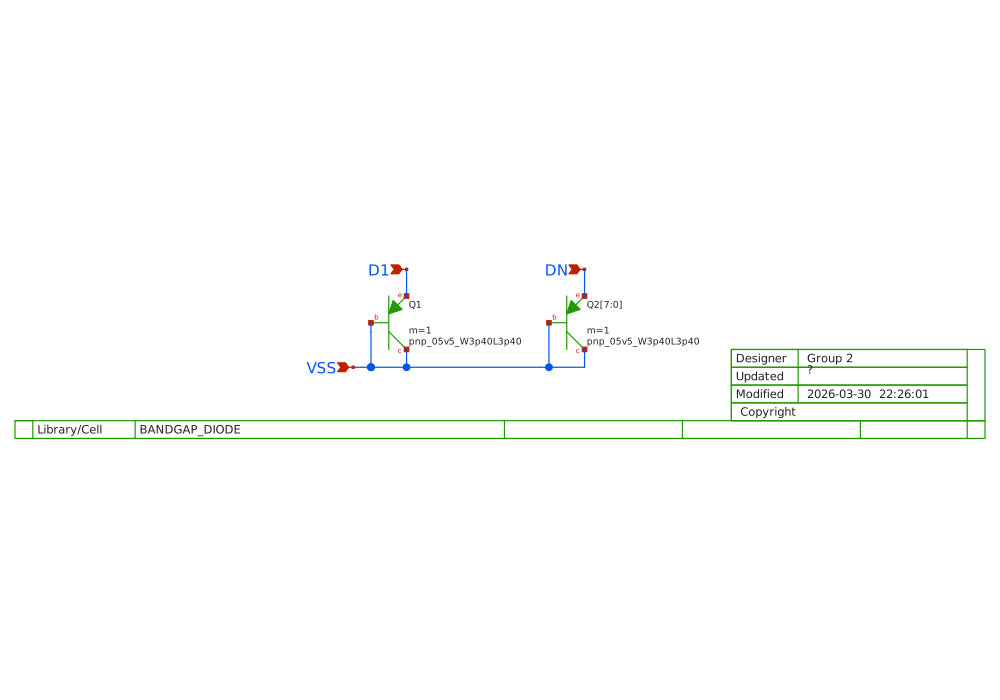
BANDGAP_DIODE
Diodes implemented using NPN BJTs with an area ratio of 1:8.
OSCILLATOR
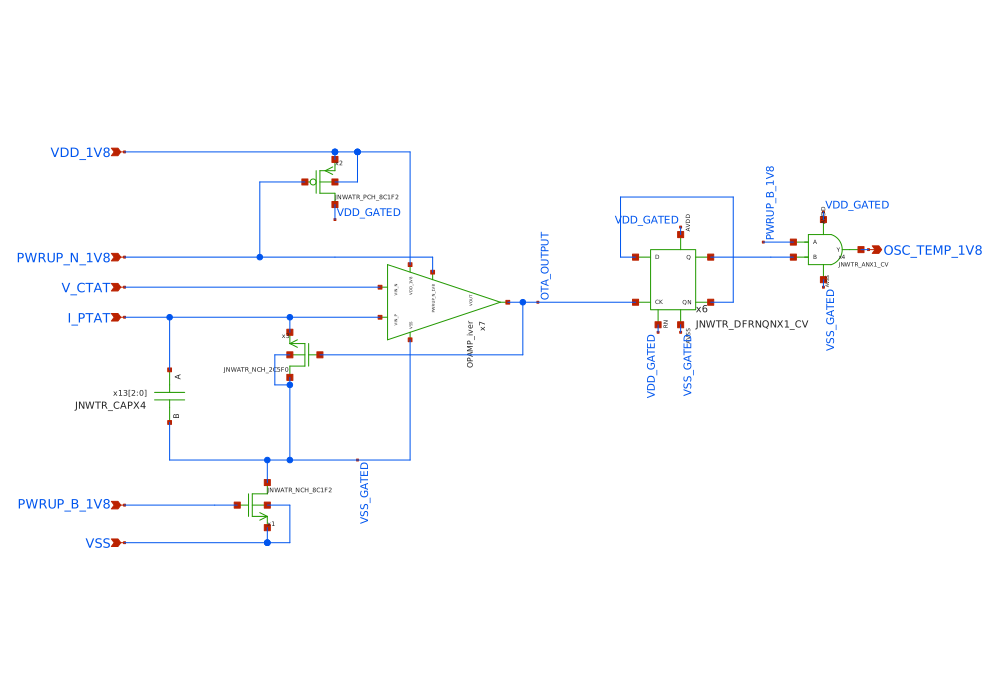
The oscillator is responsible for converting the V_CTAT and I_PTAT produced by the bandgap into a temperature-dependent frequency that can be further processed by digital logic.
To achieve this, a transistor is charged using the I_PTAT current until it reaches the voltage given by V_CTAT. The comparison is performed using an OTA. The output of this OTA drives an NMOS which discharges the capacitor.
Buffers are implemented to introduce a small delay between the NMOS gate and the OTA. This delay ensures that the capacitor has enough time to fully charge or discharge before the gate voltage switches. This prevents incomplete transitions and ensuring stable oscillation.
The oscillator serves as the clock signal for a D-FF. The inverted output !Q is fed back to the D input, causing the flip-flop to toggle between 1 and 0 on every clock cycle. The resulting output signal is then used as a counting signal for subsequent digital processing.
COMPARATOR
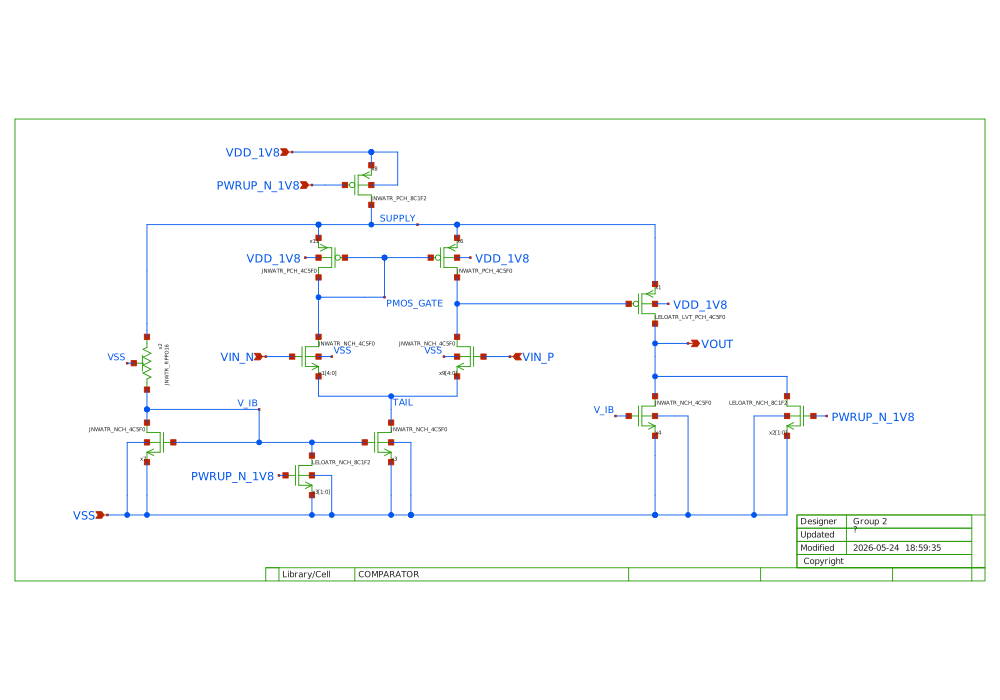
The comparator is used to create a strong (almost rail-to-rail swing) signal indicating which of the input signals is higher.
At it’s center, a differential input pair shares a common source voltage. The current ratio through the two branches of these transistors is proportional to the input voltages. The current mirror converts the differential current into a single-ended voltage with gain. The node labeled TAIL sits right above a current sink that forces a set current through the differential pair, increasing gain and stability. This total current is controlled by the bias voltage V_IB generated by the bottom left current mirror and resistor. The two transistors around the VOUT node make up a second stage amplifier providing additional gain to improve the output swing.
Power gating is used to limit leakage current by turning off the bias voltage node and disconnecting VDD when the comparator is disabled. As a further measure, VOUT is also pulled low when in powersaving mode, avoiding a floating gate on the output.